
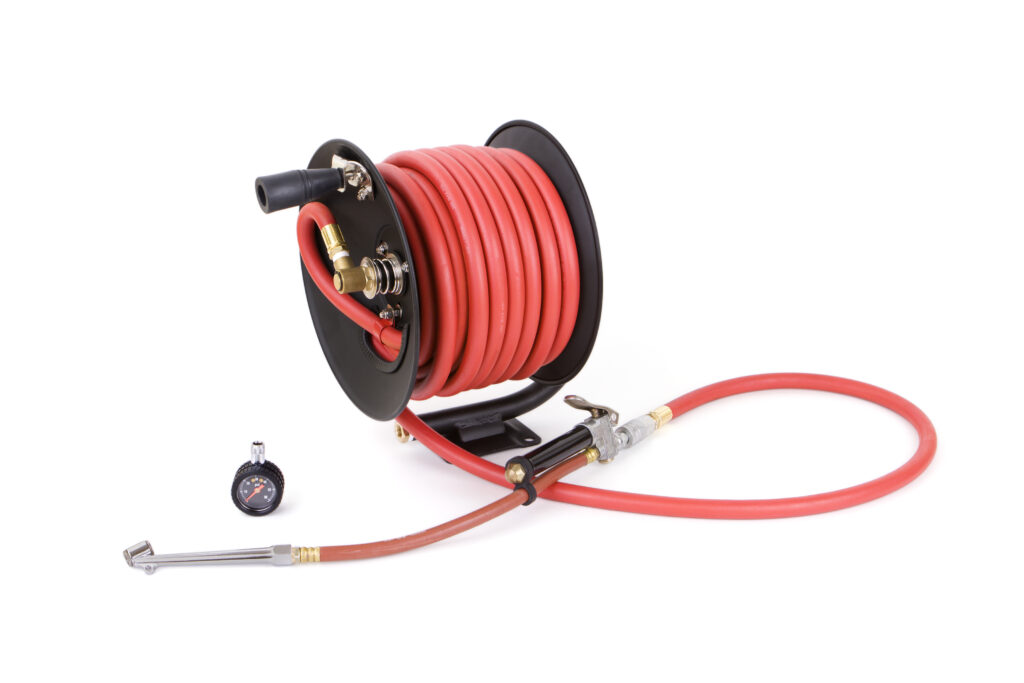
Air hose is everywhere in a working shop, and because it is so common, it is easy to grab whatever is on hand and get back to the job. But the air hose you choose affects how well your tools perform, how safe your setup is, and how long the hose lasts. An undersized hose starves your tools of the airflow they need, while the wrong material cracks and fails in conditions it was never built for. Getting the selection right keeps your pneumatic tools running at full capacity and your shop operating safely. Here is what to consider.
Size Determines Airflow
The inside diameter of your air hose controls how much air reaches your tool, and airflow is what makes pneumatic tools work. Run a hose that is too narrow or too long and you create a pressure drop that leaves your tools underpowered, even when your compressor is putting out plenty of air. Impact wrenches, grinders, and sanders that demand high airflow suffer the most from an undersized hose.
When you are matching a hose to your tools, consider the air consumption of the tools you run and the length of hose you need to reach the work. A larger inside diameter delivers more air over a given distance. The team at ASJ Industrial Hose & Fittings can help you size the hose so your tools get the airflow they were designed to use.
Pressure Rating and Safety
Air under pressure is stored energy, and a hose that fails under pressure can whip, spray debris, or cause injury. Every air hose carries a working pressure rating, and that rating has to comfortably exceed the pressure your system runs at. Cutting it close is a safety risk you do not want in a busy shop.
When you are evaluating an air hose, check that:
- The working pressure rating exceeds your system’s operating pressure
- The fittings and couplings are rated to match the hose
- The hose and connections are in good condition before each use
- Quick disconnect couplings are properly seated and secure
Matching the pressure rating across the hose and every fitting keeps the whole assembly safe.
Material Matters for Durability and Handling
Air hose comes in different materials, and each brings tradeoffs in weight, flexibility, and durability. Rubber hose is tough and lies flat, standing up well to abrasion and heavy shop use, though it is heavier to drag around. Other compounds are lighter and stay flexible in cold conditions but may not take the same abuse. The right choice depends on your environment, whether the hose is dragged across rough floors, left out in the cold, or exposed to oil and chemicals.
Think about where and how the hose will actually be used. A hose that stays flexible and resists the conditions in your shop lasts longer and is less frustrating to work with day to day. If you are weighing the options, call (951) 735-1351 and we will talk through what fits your work.
Fittings and Quick Disconnects
Air systems live and die by their connections. Quick disconnect couplings let you swap tools fast, but they have to be matched to the hose and rated for the pressure. A leaking or mismatched fitting wastes air, drops your pressure, and makes your compressor work harder than it should. Keeping your couplings consistent across the shop also means any tool connects to any hose without hunting for an adapter.
At ASJ Industrial Hose & Fittings, we stock the air hose, fittings, and quick disconnect couplings that build a reliable pneumatic setup. We have supplied shops and industrial operations since 1982, so we can help you put together connections that hold tight and keep your air where it belongs.
Build an Air System That Works
The right air hose delivers full airflow to your tools, holds up to the demands of your shop, and keeps your crew safe. It is worth a few minutes to get the size, pressure rating, material, and fittings right. Visit our Corona store or call ASJ Industrial Hose & Fittings at (951) 735-1351 and we will help you set up an air hose system that keeps your tools running strong.

 Phone: