
Valves are the control points of any fluid system, and selecting the wrong type can lead to inefficiency, premature wear, or outright failure. Two of the most common valve types found in industrial hose systems are ball valves and butterfly valves. On the surface they serve the same basic function — stopping and starting flow — but they’re built differently, behave differently, and excel in different situations.
At ASJ Industrial Hose & Fittings, we stock both and have been helping operations across multiple industries make the right call since 1982. Here’s a straightforward breakdown to help you understand which valve type belongs in your system.
How Each Valve Works
A ball valve uses a rotating sphere with a bore through the center. When the bore aligns with the pipe or hose, flow passes through. When the ball is rotated 90 degrees, the solid side of the sphere blocks flow completely. The result is a fast, positive shutoff with minimal flow restriction when open.
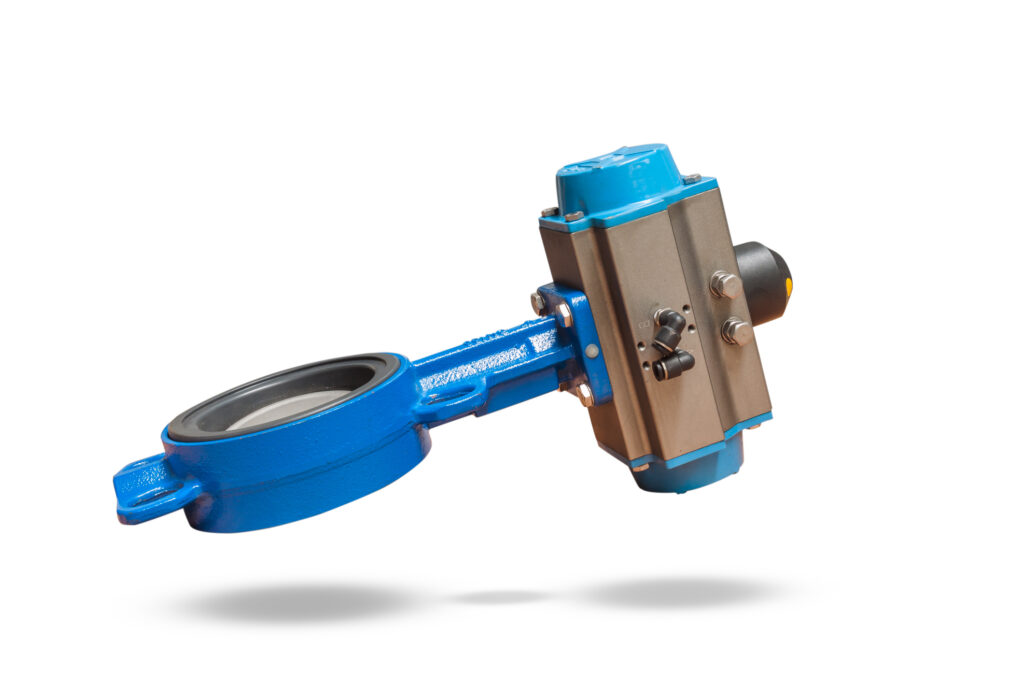
A butterfly valve uses a disc mounted on a rotating shaft positioned in the center of the flow path. Rotating the disc 90 degrees moves it from fully blocking flow to nearly parallel with it. Because the disc remains in the flow path even when open, butterfly valves introduce slightly more flow restriction than ball valves — but they offer advantages that make them the better choice in many applications.
Where Ball Valves Excel
Ball valves are the preferred choice when a tight, reliable shutoff is the top priority. Their design creates a seal that is extremely resistant to leakage, which makes them well-suited for applications involving gases, high-pressure fluids, or any situation where even minor leakage is unacceptable.
They’re also an excellent choice for applications that require infrequent operation — ball valves can sit in one position for long periods without seizing or degrading the way some other valve types can. Common applications include compressed air systems, hydraulic lines, petroleum transfer, and chemical handling where full shutoff capability is critical.
Ball valves are available in standard port and full port configurations. Full port ball valves feature a bore diameter that matches the pipe or hose diameter, eliminating flow restriction almost entirely — an important consideration in applications where pressure drop must be minimized.
Where Butterfly Valves Excel
Butterfly valves shine in applications that involve large diameter lines, high-volume flow, and frequent operation. Their compact, lightweight design makes them significantly easier and less expensive to install in large sizes compared to ball valves of equivalent diameter. A large ball valve can be heavy and costly; a large butterfly valve is manageable and economical.
They’re also well-suited to throttling applications — situations where you need to regulate flow rather than simply start or stop it. While ball valves can technically be used for throttling, doing so repeatedly causes accelerated wear on the ball and seats. Butterfly valves handle partial-open operation more gracefully over time.
Typical applications include water supply and treatment systems, HVAC, fire suppression, slurry handling, and food and beverage processing where large flow volumes and regular operation are the norm.
The Factors That Should Drive Your Decision
When choosing between ball and butterfly valves, consider the following:
- Line size. Butterfly valves become increasingly practical and cost-effective at larger diameters.
- Shutoff requirements. When zero-leakage shutoff is critical, ball valves are the stronger choice.
- Operating frequency. Frequently cycled valves often fare better as butterfly valves.
- Throttling needs. If flow regulation is required, butterfly valves are better suited to the task.
- Media type. Viscous fluids, slurries, or media with solids may influence which valve type performs better in your system.
Find the Right Valve at ASJ Industrial Hose & Fittings
Our team has the experience to help you evaluate your system requirements and select the valve that fits your application correctly the first time. We carry ball valves, butterfly valves, and a full range of other valve types in our Corona, CA location, with extensive inventory available for immediate will-call pickup or shipment anywhere in North America.
Call us today at (951) 735-1351 and let us help you keep your fluid systems under control.

 Phone: