
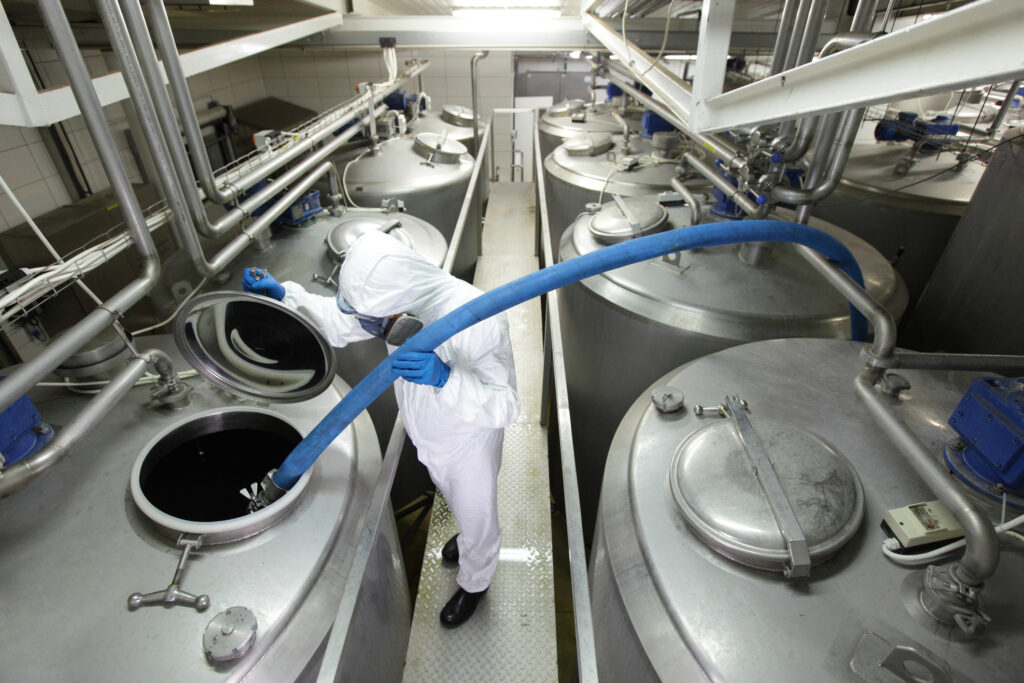
Not all hoses are built to handle chemicals. A hose that performs flawlessly transferring water or air can degrade rapidly — or fail catastrophically — when exposed to the wrong chemical compound. For operations that handle solvents, acids, caustics, or other hazardous materials, selecting a chemically compatible hose isn’t just a performance decision. It’s a safety one.
At ASJ Industrial Hose & Fittings, we’ve been helping chemical plants and industrial operations find the right hose solutions since 1982. Here’s what every purchasing manager, maintenance supervisor, and operations lead should understand before specifying a chemical hose.
Why Compatibility Matters
When a hose material is incompatible with the chemical it carries, the consequences can range from gradual degradation to sudden failure. Incompatibility typically manifests in a few ways:
- Swelling or softening, which weakens the hose wall and reduces pressure rating
- Hardening or cracking, which leads to leaks or rupture under pressure
- Liner deterioration, which can contaminate the product being transferred
- Permeation, where chemical molecules migrate through the hose wall, creating exposure risks even without a visible leak
Any of these failure modes can result in costly downtime, product loss, equipment damage, environmental liability, and serious safety hazards for workers.
The Variables That Determine Compatibility
Chemical hose selection isn’t a single decision — it’s a combination of several factors that must all be evaluated together.
Hose Tube Material
The inner liner is the first line of defense. Common tube materials include EPDM, UHMWPE (ultra-high molecular weight polyethylene), PTFE, nitrile, and neoprene. Each offers a different chemical resistance profile. UHMWPE liners, for example, offer broad compatibility with a wide range of acids, solvents, and caustics. PTFE liners handle highly aggressive chemicals where most other materials fall short. Nitrile works well with petroleum-based products but is not appropriate for many solvents or ketones.
Concentration and Temperature
A hose may be rated as compatible with a specific chemical at low concentrations but degrade rapidly at higher concentrations. Temperature compounds this — elevated temperatures accelerate chemical attack on hose materials. Always evaluate compatibility at the actual concentration and temperature your application involves, not just at baseline conditions.
Pressure Requirements
Chemical hoses must be rated for the working pressure of your system with an appropriate safety factor. Compatibility issues that weaken the hose wall can reduce effective pressure ratings, making a properly rated hose perform below spec when the wrong chemical is introduced.
End Fittings
The hose tube isn’t the only component in contact with the chemical. Fittings must also be chemically compatible. A stainless steel fitting may be appropriate for one chemical and completely unsuitable for another. Brass fittings, for instance, should not be used with ammonia or certain amines.
Use Manufacturer Compatibility Charts — and Verify
Hose manufacturers publish chemical resistance charts that list compatibility ratings for common chemicals across different tube materials. These are a valuable starting point, but they should never be the final word. When you’re working with chemical mixtures, high concentrations, or elevated temperatures, consult with a knowledgeable supplier who can help you evaluate your specific conditions.
Work With a Supplier Who Knows the Difference
At ASJ Industrial Hose & Fittings, our team has decades of experience matching hose and fitting systems to demanding chemical applications. We carry a broad selection of chemical-rated hoses and can help you work through the compatibility questions before you make a purchase — not after a failure forces the issue. Our extensive inventory means many products are available for immediate pickup at our Corona, CA location or shipment anywhere in North America.
Call us at (951) 735-1351 to discuss your application. We’ll help you find the right hose the first time.

 Phone: