
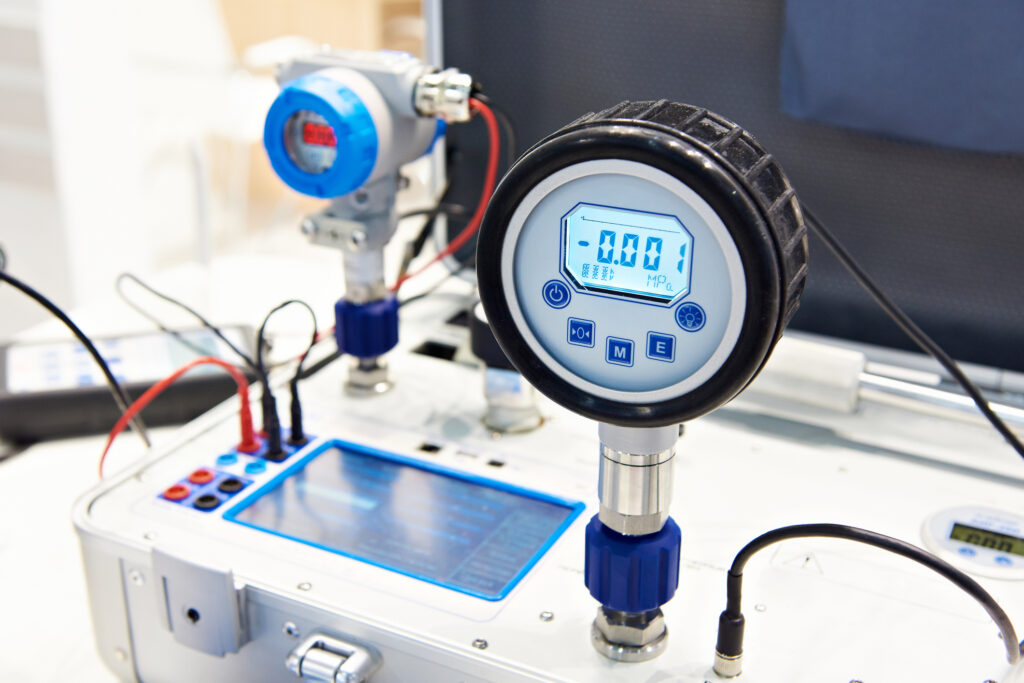
In industrial fluid systems, pressure is not something you guess — it is something you measure. Without accurate gauges, operators lose visibility into system performance, increasing the risk of leaks, over-pressurization, equipment strain, and costly downtime.
While hoses, fittings, and valves move and control material, gauges provide the oversight needed to keep everything operating safely. At ASJ Industrial Hose & Fittings, we supply durable, high-quality gauges designed for demanding applications across construction, oil and gas, chemical processing, hydraulic systems, and food and beverage operations.
Choosing the right gauge requires more than matching a PSI number.
Understand the Type of Measurement Required
The first step in selecting a gauge is determining what needs to be measured. Different systems require different types of monitoring.
Common gauge types include:
- Pressure gauges for monitoring positive system pressure
- Vacuum gauges for negative pressure systems
- Combination vacuum/pressure gauges for dual measurement
- Dry gauges for general-purpose applications
- Liquid-filled gauges for vibration-prone environments
Liquid-filled gauges are particularly useful in heavy equipment and hydraulic systems because the internal fill dampens needle movement caused by vibration. This improves readability and extends gauge lifespan.
Understanding your system’s behavior helps determine which type provides the most accurate readings.
Match the PSI Range to the Application
Selecting the wrong PSI range is one of the most common mistakes in gauge selection. A gauge should not operate constantly at the top end of its range, as this reduces accuracy and shortens its service life.
Best practice is to choose a gauge with a maximum range approximately 1.5 to 2 times your normal operating pressure. For example, if your system runs at 2,000 PSI, a gauge rated for 3,000–4,000 PSI may be more appropriate than one capped at 2,000 PSI.
At ASJ Industrial Hose & Fittings, we stock gauges ranging from low-pressure applications up to 10,000 PSI, allowing operators to select equipment that aligns with system demands.
Consider Mounting and Installation Requirements
Gauges are available in back-mount or bottom-mount configurations. The correct choice depends on panel design, piping layout, and accessibility.
Before purchasing, evaluate:
- Available mounting space
- Orientation requirements
- Thread size and compatibility
- Ease of visibility for operators
A gauge that is difficult to read or improperly positioned reduces its effectiveness, even if technically rated for the application.
Evaluate Material Compatibility
Industrial environments can be harsh. Exposure to moisture, chemicals, or fluctuating temperatures may require corrosion-resistant materials.
Gauge housing options may include:
- Brass for general industrial use
- Stainless steel for corrosive or chemical environments
- ABS casing for lightweight durability
Matching the gauge material to the operating environment prevents premature failure and ensures long-term accuracy.
Don’t Overlook the Role of Gauges in System Safety
Pressure spikes often occur before visible system failure. A properly selected gauge acts as an early warning device, allowing operators to intervene before hoses, valves, or fittings are damaged.
In hydraulic and oil and gas systems especially, accurate monitoring supports both equipment longevity and worker safety.
With over 35 years serving industrial customers, ASJ Industrial Hose & Fittings understands how gauges integrate into complete hose assemblies and fluid transfer systems. Whether you are outfitting a new installation or replacing aging monitoring equipment, our knowledgeable team can help guide you to the right solution.
To discuss your gauge requirements or place an order, call (951) 735-1351. We work hard to ensure every order is fulfilled on time and error free.
Reliable pressure monitoring is not optional in industrial operations. The right gauge protects your system, your equipment, and your bottom line.

 Phone: