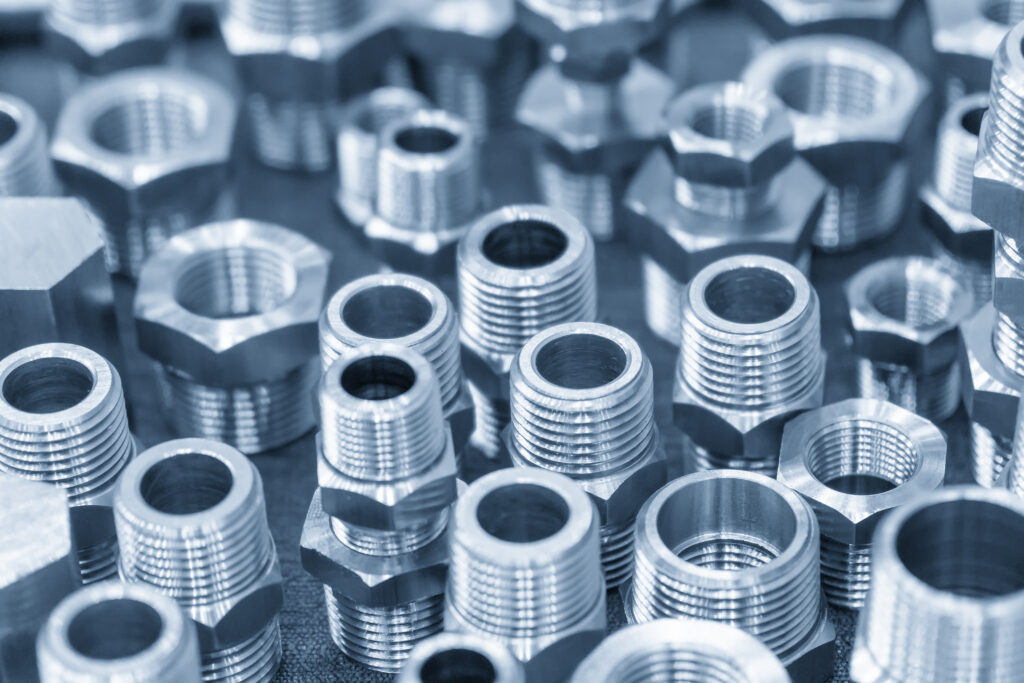
The four most common hydraulic fitting types in North America are JIC, NPT, ORB, and ORFS, and each one seals in a different way. Identifying the right one comes down to three checks: how the fitting seals, the thread diameter, and the thread pitch. For equipment operators and maintenance teams in Anaheim, getting this right the first time means fewer leaks, fewer return trips, and less downtime. At ASJ Industrial Hose & Fittings, we help customers match hydraulic fittings every day, and this guide covers what you need to know before you order.
Why Does Thread Identification Matter?
Many hydraulic fittings look nearly identical at a glance. A fitting that threads on partway may still fail to seal, and a mismatched connection under hydraulic pressure can leak, blow off, or damage a port. Correct identification protects your crew, your equipment, and your hydraulic fluid.
What Is a JIC Fitting?
JIC fittings use a 37-degree flared seat to create a metal-to-metal seal. The threads are straight, so they do not do the sealing. JIC is one of the most widely used hydraulic connections on mobile and industrial equipment because it is reliable, reusable, and available in a wide range of sizes.
One common mistake: JIC fittings are easily confused with 45-degree SAE flare fittings, which share some thread sizes. Always confirm the seat angle before connecting the two.
What Is an NPT Fitting?
NPT stands for National Pipe Taper. The threads narrow along their length, and the seal forms as the threads wedge together, usually with the help of thread sealant or tape. NPT is common on older equipment, pumps, and general plumbing connections. Because the seal relies on thread deformation, NPT fittings can loosen under heavy vibration and should not be overtightened or repeatedly reused.
What Is an ORB Fitting?
ORB, or O-ring boss, fittings use straight threads with an O-ring on the male end. The O-ring seals against a machined port face. ORB connections are common on hydraulic pumps, valves, and cylinders because they seal well at high pressure and resist leaking far better than tapered threads.
What Is an ORFS Fitting?
ORFS, or O-ring face seal, fittings have a flat face on the male end with an O-ring seated in a groove. When tightened, the O-ring compresses against the flat face of the female fitting. ORFS is a top choice for high-pressure systems and heavy vibration, which is why it shows up often on construction and heavy machinery.
How Can You Identify a Fitting in the Field?
A few simple tools make identification much easier:
- Calipers to measure the thread outside diameter on male threads or inside diameter on female threads
- A thread pitch gauge to count threads per inch or confirm metric pitch
- A seat angle gauge to tell 37-degree JIC apart from 45-degree SAE flare
- A visual check for tapered threads, O-rings, or a flat sealing face
If the measurements do not line up with a standard size, you may be working with metric or BSP threads, which are common on imported equipment.
What If You Need to Connect Two Different Types?
Adapters let you join mismatched thread types safely, such as ORB to JIC or NPT to ORFS. Using the correct adapter is always safer than forcing two incompatible fittings together.
Get the Right Hydraulic Fittings for Your Anaheim Operation
ASJ Industrial Hose & Fittings carries a complete line of Continental ContiTech hydraulic fittings and adapters for low, medium, and high-pressure applications. Many items are ready for same-day pickup at our Corona store, a short drive from Anaheim, or we can ship anywhere in North America. If you are unsure what you have, bring in the fitting or give us the measurements and our experienced staff will help you match it. Call (951) 735-1351 today and we will make sure your order is filled on time and error free.

 Phone: