
When discussing hose assemblies, most of the focus tends to land on the hose itself or the fittings that connect it. Yet one of the most critical components in system reliability is often overlooked: the clamp.
Clamps secure the hose to the fitting, stabilize connections under vibration, and help prevent leaks in demanding environments. When improperly selected or installed, even the highest-quality hose can fail prematurely. At ASJ Industrial Hose & Fittings, we have seen firsthand how clamp selection directly impacts system performance across construction, heavy machinery, oil and gas, concrete, chemical, and material handling operations.
Understanding the role of clamps can prevent downtime and improve safety.
Why Clamps Matter More Than You Think
Clamps serve two essential purposes:
- Creating a secure seal between hose and fitting
- Providing mechanical stability under pressure and vibration
In high-demand environments, hoses experience movement, pressure fluctuations, and environmental stress. Without the proper clamp strength and material, connections may loosen over time, leading to leaks or hose blow-offs.
Even minor seepage can create safety risks, environmental concerns, or equipment inefficiencies.
Choosing the Right Clamp Type
Not all clamps are built for the same conditions. Selecting the wrong design can compromise your assembly.
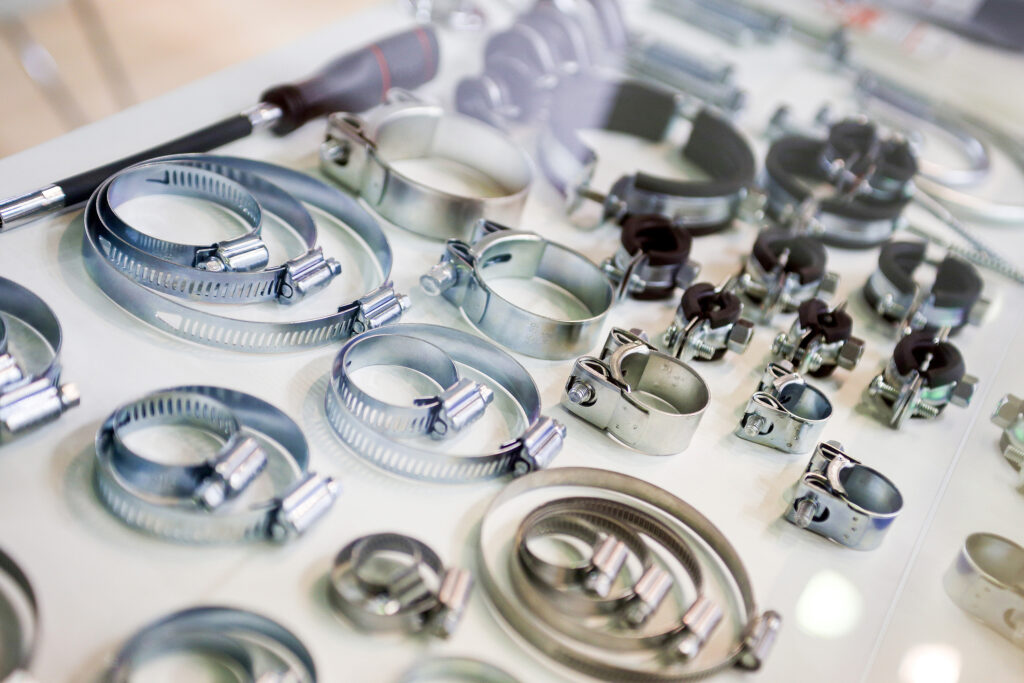
Common clamp options include:
- Worm gear clamps for general-purpose tightening and adjustability
- Stainless steel clamps for corrosion resistance
- Center punch clamps for high-vibration environments
- Strapping clamps for heavy-duty applications
- Specialized clamping tools for secure installation
For example, stainless steel clamps are often preferred in chemical or outdoor environments where corrosion is a concern. Heavy equipment applications may require reinforced designs that withstand vibration and shock.
Selecting a clamp based solely on size without considering material and strength rating can shorten the lifespan of your hose assembly.
Material Compatibility and Environmental Conditions
Environmental exposure plays a major role in clamp performance. In construction and concrete applications, dust and debris may affect hardware integrity. In oil and gas operations, exposure to hydrocarbons and fluctuating temperatures can weaken inferior materials.
Key factors to evaluate include:
- Exposure to moisture or corrosive substances
- Temperature extremes
- System pressure levels
- Frequency of movement or vibration
Matching clamp material to operating conditions improves long-term stability.
Proper Installation Prevents Failure
Even the correct clamp can fail if improperly installed. Over-tightening may damage the hose cover. Under-tightening can result in leaks or slippage.
Proper placement is equally important. Clamps should be positioned behind the fitting barb and tightened evenly to distribute pressure. In some heavy-duty applications, dual clamps may be recommended for additional security.
At ASJ Industrial Hose & Fittings, we work closely with contractors and maintenance teams to ensure they select not only the right clamp type but also the appropriate installation approach for their specific application.
Clamps as Part of a Complete System
Clamps should never be viewed as an afterthought. They are part of a larger hose system that includes fittings, valves, and gauges. A weak link in any one component can compromise the entire assembly.
When sourcing hose accessories, it is important to work with a supplier that understands the interaction between components. With over 35 years serving industrial customers, ASJ Industrial Hose & Fittings helps ensure every clamp meets the performance standards required for your project.
Whether you need stainless steel clamps for corrosive environments, heavy-duty strapping for material handling, or specialized tools for proper installation, our knowledgeable team can guide you to the right solution.
To discuss your hose accessory needs or place an order, call (951) 735-1351. We take pride in fulfilling every order on time and error free.
In industrial systems, reliability depends on details. The right clamp may be small, but its role in protecting your hose assembly is significant.

 Phone: