
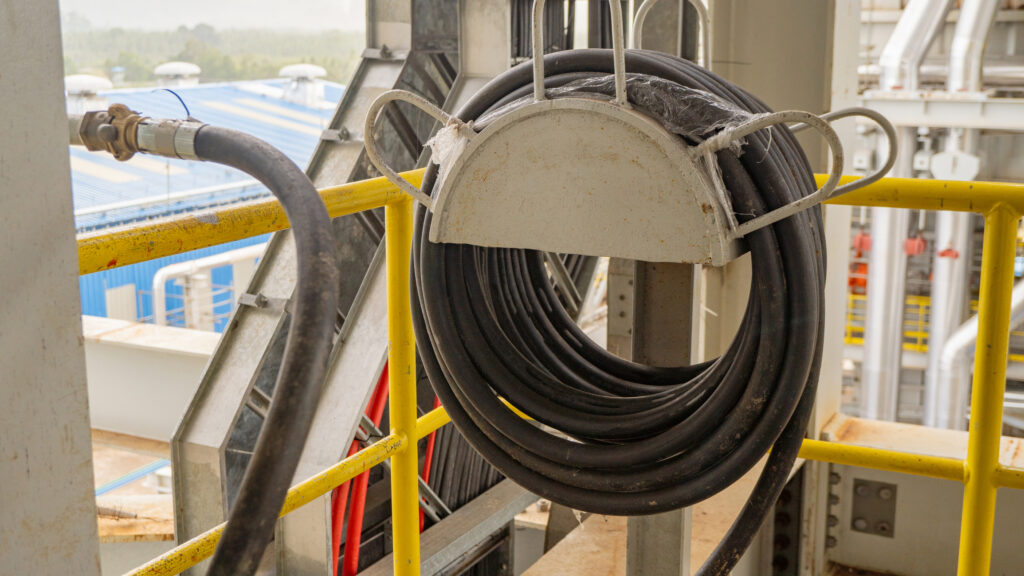
In industrial operations, hoses and fittings are the visible workhorses. They transfer fluids, power equipment, and keep processes moving. But there’s one small component that plays an outsized role in keeping everything safe and efficient: the pressure gauge. At ASJ Industrial Hose & Fittings, we emphasize gauges as a critical part of every hose system—not an afterthought.
The Purpose of Gauges in Hose Systems
A gauge measures the internal pressure of a hose system, giving operators a real-time snapshot of performance. This simple device provides valuable data that:
- Ensures safety: Identifies when pressure is too high or too low.
- Protects equipment: Prevents damage to pumps, valves, and hoses from pressure extremes.
- Improves efficiency: Helps maintain steady pressure for smooth, reliable operations.
- Reduces downtime: Detects irregularities before they escalate into costly failures.
Without gauges, operators are essentially running blind.
What Happens Without Reliable Gauges
Ignoring pressure monitoring can quickly lead to problems:
- Overpressure: Can burst hoses, injure workers, or damage machinery.
- Underpressure: May cause processes to stall, lowering productivity.
- Hidden leaks: Pressure drops often reveal leaks that might otherwise go unnoticed.
- Unexpected downtime: Small issues go unchecked until they cause a major system failure.
Simply put, without accurate gauges, it’s impossible to manage industrial hose systems effectively.
Types of Gauges Used in Industrial Applications
Different operations require different gauges depending on the material being moved and the system’s conditions. Common options include:
- Bourdon tube gauges: The most widely used for general industrial purposes.
- Digital gauges: Offer precision and easy-to-read displays for modern applications.
- Compound gauges: Measure both pressure and vacuum in systems that operate in varied conditions.
- High-pressure gauges: Built to handle the extreme demands of hydraulic systems.
Selecting the right gauge depends on pressure range, system design, and application environment.
Best Practices for Gauge Selection and Use
When integrating gauges into hose systems, keep these guidelines in mind:
- Choose the correct range: A gauge should read at 50–75% of its maximum scale during normal operation for accuracy and longevity.
- Match the material: Ensure the gauge housing and wetted parts are compatible with your fluid or gas.
- Install in the right location: Position gauges where pressure readings are most critical, such as near pumps or regulators.
- Inspect regularly: Replace gauges that show signs of wear, fogging, or inaccuracy.
Why ASJ Industrial Hose & Fittings Is Your Gauge Partner
At ASJ Industrial Hose & Fittings, we carry a full line of industrial gauges designed to meet the needs of diverse industries—from construction and agriculture to chemical processing and food & beverage. Our experts help customers choose the right gauge for their systems, ensuring accuracy, durability, and safety. With our large on-site inventory, most gauges are available for immediate pickup in Corona, CA, or fast shipping across North America.
Keep Pressure Under Control
Gauges may be small, but they’re indispensable for protecting hose systems, improving efficiency, and preventing costly downtime. By working with ASJ Industrial Hose & Fittings, you’ll get more than just a product—you’ll get expertise, support, and peace of mind that your systems are running safely.
Call us today at (951) 735-1351 to learn more about our wide selection of gauges and fittings for industrial hose systems.

 Phone: