
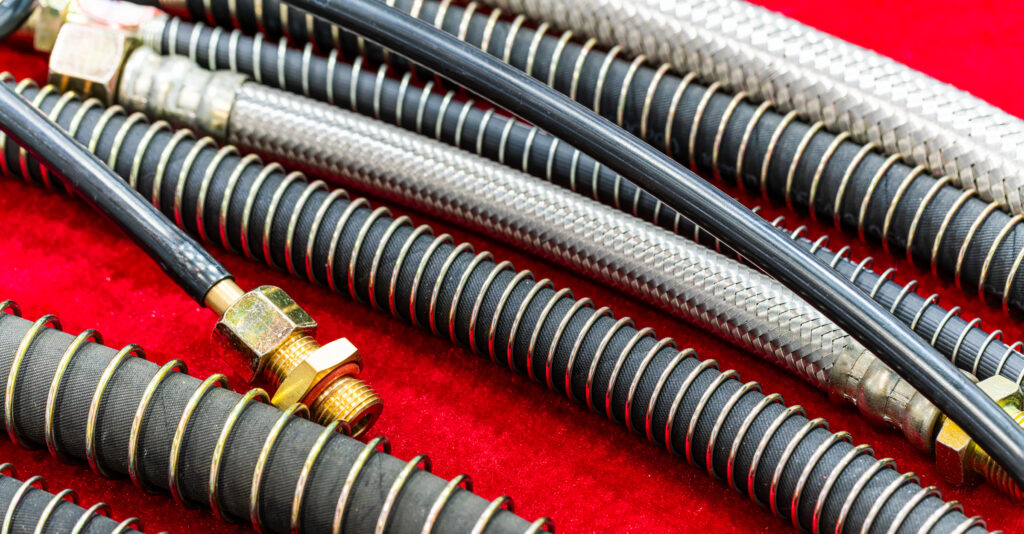
In industrial operations, hoses are often seen as simple transport tools—but they’re much more than that. The material your hose is made from can determine whether your system performs smoothly or fails under pressure. At ASJ Industrial Hose & Fittings, we help companies choose hose materials that match their exact needs, whether they’re moving air, water, chemicals, hydraulic fluids, or abrasive materials. Selecting the right material can improve safety, boost performance, and protect both your equipment and your budget.
The Hidden Impact of Hose Materials
Different industries face different challenges. Construction requires abrasion-resistant hoses for concrete and debris-filled environments. Chemical processing demands materials that can withstand corrosion. The food and beverage industry needs sanitary, FDA-approved hoses. Choosing a one-size-fits-all hose leads to premature failures, leaks, compliance violations, and costly downtime.
- Temperature resistance
- Chemical compatibility
- Abrasion and wear protection
- Flexibility vs. rigidity requirements
- Compliance with industry or safety standards
Each of these factors plays a key role in ensuring your hoses perform safely and reliably under real-world conditions.
Common Hose Materials and Their Strengths
While hoses may look similar on the outside, their internal material structures set them apart. At ASJ Industrial Hose & Fittings, we carry industrial-grade hose materials designed to handle precise applications.
- Rubber hoses – Durable, flexible, and suitable for air, water, and mild chemicals
- PVC hoses – Lightweight, low-cost, best for light-duty air and water transfer
- Polyurethane hoses – Highly abrasion resistant, ideal for granular or high-wear environments
- Silicone hoses – Excellent for high heat, sanitary, and food-grade applications
- Stainless steel braided hoses – Superior pressure handling and durability
- Composite hoses – Built for aggressive chemicals and corrosive materials
Choosing the right material can mean the difference between a hose that lasts months—and one that lasts years.
Safety Should Always Come First
A hose failure isn’t just inconvenient—it can be dangerous. In chemical plants, a burst hose can expose workers to hazardous materials. In hydraulic applications, a leak can create unsafe pressure drops and equipment stoppages. The right material helps you reduce risk and protect your workforce.
- Prevents dangerous leaks under pressure
- Minimizes equipment damage from ruptured lines
- Avoids exposure to toxic or corrosive fluids
- Reduces fire and explosion risks in fuel transfer applications
At ASJ Industrial Hose & Fittings, our team helps you choose hoses that meet your safety requirements and help you comply with OSHA and industry standards.
Matching Hose Material to Industry Needs
Every industry has its own set of demands—and hose material selection should reflect that.
- Construction – Abrasion-resistant hoses for concrete, slurry, and rugged terrain
- Oil & Gas – High-temperature, reinforced hoses to handle fuel, crude, and chemicals
- Food & Beverage – FDA-approved, sanitary-grade hoses with smooth bore designs
- Manufacturing – Chemical-resistant hoses for production lines and machinery
- Heavy Equipment – Hydraulic hoses built to withstand pressure spikes and flexing
At ASJ Industrial Hose & Fittings, we don’t just sell hoses—we help you match material to performance requirements.
Long-Term Savings Through Smarter Material Choices
The cheapest hose is rarely the most economical. When poor material selection leads to frequent replacements, downtime, and safety issues, your overall cost goes up. Investing in the right hose material up front helps reduce long-term expenses.
- Fewer emergency replacements
- Less downtime and system disruption
- Longer service life under harsh conditions
- Reduced maintenance and labor costs
Choosing the right hose material protects productivity, equipment, and your bottom line.
Partner With Experts Who Know Industrial Materials
At ASJ Industrial Hose & Fittings, we’ve supplied industrial hoses and fittings since 1982. When it comes to selecting the right material, we consider your industry, application, pressure rating, environment, and safety standards—and we get it right the first time.
Call (951) 735-1351 today for expert guidance in choosing the right hose materials for your project.

 Phone: